















Rethinking HIT: A Fellowship Project That Saved $1M+ Annually
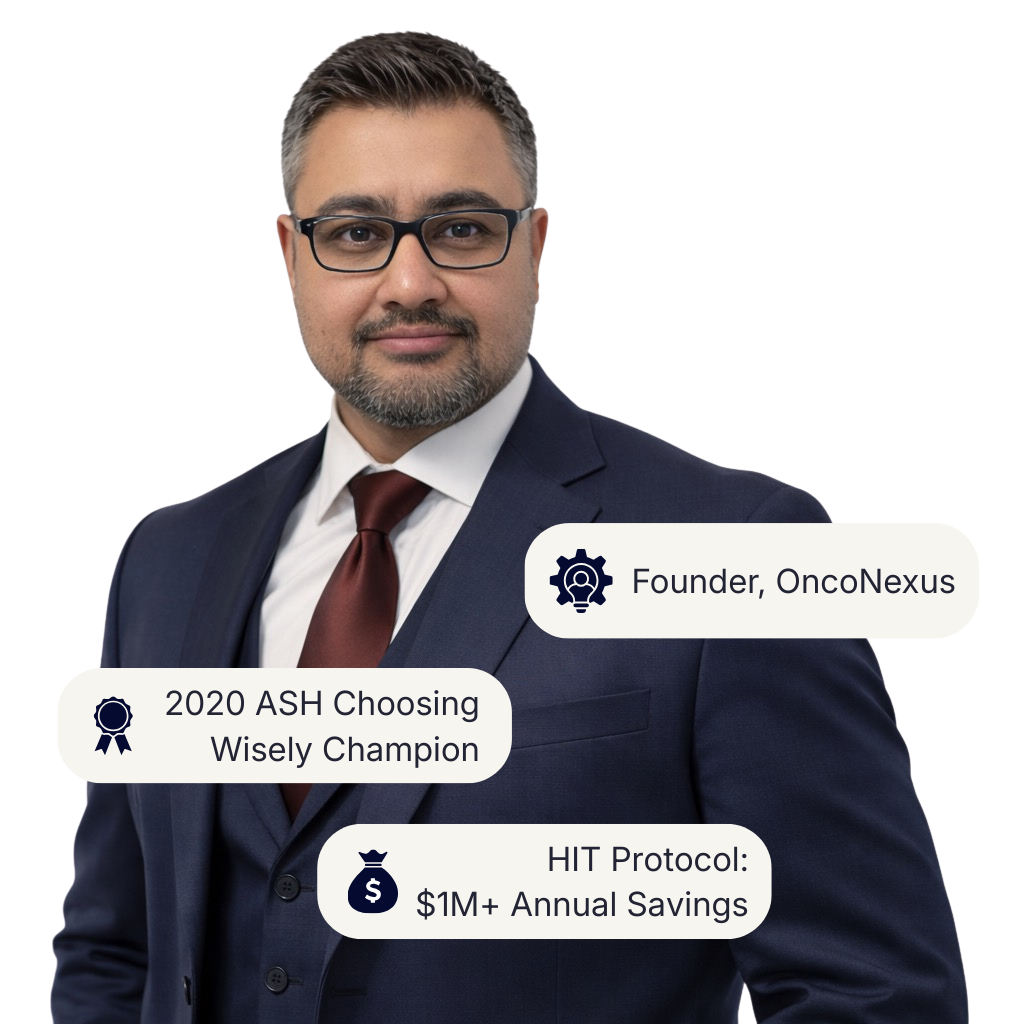
During his fellowship, Dr. Swarup designed and implemented a cross-departmental protocol for diagnosing and managing heparin-induced thrombocytopenia (HIT). Tested and refined over three years, the protocol became an institutional practice that continues to improve patient safety while saving over $1 million annually.
The initiative led to an The initiative led to an 18.8% reduction in immunoassay tests, 50% reduction in SRA tests, 42% reduction in alternative anticoagulation use, a four-day decrease in average hospital stay, and a 49% overall cost reduction, ultimately driving a 94% increase in contribution margin. This work earned him the ASH Choosing Wisely National Champion Award (2020)., ultimately driving a 94% increase in contribution margin. This work earned him the ASH Choosing Wisely National Champion Award (2020).
The initiative led to an The initiative led to an 18.8% reduction in immunoassay tests, 50% reduction in SRA tests, 42% reduction in alternative anticoagulation use, a four-day decrease in average hospital stay, and a 49% overall cost reduction, ultimately driving a 94% increase in contribution margin. This work earned him the ASH Choosing Wisely National Champion Award (2020)., ultimately driving a 94% increase in contribution margin. This work earned him the ASH Choosing Wisely National Champion Award (2020).
Transforming Oncology Care using advanced AI with Onconexus
As co-founder of OncoNexus, Dr. Swarup leads clinical design addressing oncology burnout, systemic inefficiency, and administrative overload. The platform leverages advanced AI to streamline complex workflows such as clinical documentation, billing, and task management; enabling physicians to reclaim valuable time, and ultimately focus more meaningfully on patient care and outcomes.
University of Arizona Center for Innovation Sponsored Launch Awardee (2025)
American Society of Hematology Choosing Wisely National Champion (2020)
Hemostasis & Thrombosis Research Society Research Colloquium Award (2020)